Curricular Policy
Policy Statement
Bradpole Preschool is committed to providing a high-quality, inclusive, and inspiring curriculum that enables every child to thrive. We believe that children learn best when they feel safe, valued, and supported within warm and positive relationships.
Our curriculum is rooted in the Early Years Foundation Stage (EYFS) Statutory Framework and is designed to meet the individual needs, interests, and stages of development of each child. We recognise that every child is unique and develops at their own pace. Through play, exploration, creativity, and meaningful experiences, we support children to become confident, capable, autonomous and enthusiastic learners.
We aim to provide a broad, balanced, and ambitious curriculum that promotes children’s emotional well-being, communication and language skills, physical development, independence, curiosity, creativity, and problem-solving abilities. We seek to foster positive attitudes towards learning and prepare children for future learning and successful transitions to school.
Legal and Statutory Framework
This policy is informed by:
- Early Years Foundation Stage (EYFS) Statutory Framework
• Working Together to Safeguard Children
• Equality Act 2010
• SEND Code of Practice 2015
This policy is also supported by:
- Development Matters (non-statutory curriculum guidance)
- Birth to 5 Matters
The EYFS Principles
Our curriculum and practice are guided by the four overarching principles of the Early Years Foundation Stage (EYFS).
- A Unique Child
We recognise that every child is a competent learner who can be resilient, capable, confident, and self-assured. We value each child’s individual experiences, interests, strengths, and background, and use these to support their learning and development.
- Positive Relationships
Through our key person system, we recognise that children learn best through secure and trusting relationships. Our staff work closely with children and their families to build positive partnerships that support children’s wellbeing, learning and development.
- Enabling Environments
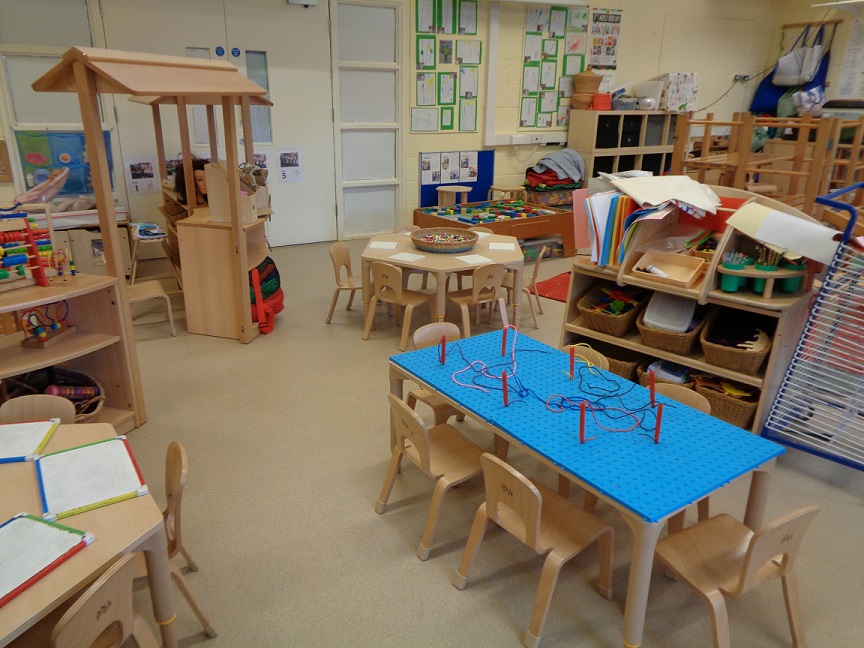
We provide a welcoming, stimulating and inclusive environment where children feel safe to explore, investigate and take considered risks in their learning. Both our indoor and outdoor environments are carefully planned to support children’s interests, learning and developmental needs.
- Learning and Development
Children learn through play, active exploration, creativity, and meaningful experiences. We provide opportunities for children to learn independently, alongside their peers, and with the support of skilled adults.
Areas of Learning and Development
Our curriculum encompasses all seven areas of learning and development identified within the EYFS.
The three Prime Areas are:
- Communication and Language
• Physical Development
• Personal, Social and Emotional Development
The four Specific Areas are:
- Literacy
• Mathematics
• Understanding the World
• Expressive Arts and Design
These areas are interconnected and are delivered through a balance of child-initiated play, adult-led experiences, routines, and everyday interactions.
Teaching and Learning
At Bradpole Preschool, we believe that play is fundamental to children’s learning and development. Our staff carefully observe children’s interests and fascinations and use these to plan engaging experiences that extend their learning.
Children are provided with opportunities to explore, investigate, create, solve problems, and develop their understanding through both indoor and outdoor learning experiences. Staff use high-quality interactions, wondering, modelling, and using sustained shared thinking to support children’s progress and encourage deeper learning.
We provide a balance of child-initiated play, adult-guided learning, small group activities, and whole-group experiences. Activities are adapted to meet the individual needs, interests, and developmental stages of the children attending.
Observation, Assessment and Planning
Assessment is an ongoing part of everyday practice and is used to ensure children receive the support and challenge they need to make progress.
Staff regularly observe children as they play and learn, considering what they know, can do, and understand. These observations are used to identify next steps and inform future planning.
We follow a continuous cycle of:
Observe → Assess → Plan → Review
Parents and carers are kept informed about their child’s learning and development through Tapestry and are encouraged to contribute to the assessment process. We use Birth to 5 matters to support professional judgement and planning.
Supporting Children with SEND and Additional Needs
Bradpole Preschool is committed to inclusive practice and ensuring that all children have equal access to learning opportunities.
Where concerns about a child’s development arise, staff work closely with parents/carers and, where appropriate, other professionals to identify needs and provide support at the earliest opportunity. Individual support plans may be developed where necessary, and practice is adapted to ensure every child can participate fully in preschool life.
We follow the SEND Code of Practice and promote equality, inclusion, and respect for all children and families.
Partnership with Parents and Carers
We recognise that parents and carers are children’s first and most important educators. We value the knowledge and insights families bring and work in partnership with them to support children’s learning and development.
Information is shared regularly through daily conversations, consultations, learning updates, and opportunities for parents/carers to contribute to their child’s learning journey on Tapestry. We encourage families to support learning at home and celebrate children’s achievements both in and outside of preschool.
Cultural Capital and British Values
We believe children should be provided with a wide range of experiences that broaden their understanding of the world around them.
Through visits, visitors, stories, celebrations, outdoor experiences, creative activities, and exploration of the local community, children develop knowledge and experiences that build their cultural capital.
British Values are embedded throughout our daily practice. Children are encouraged to make choices, take turns, share resources, develop an understanding of rules and boundaries, respect others, and celebrate similarities and differences within our diverse society.
Transition and School Readiness
We work closely with families and receiving schools to support children through periods of transition.
School readiness is viewed as more than academic achievement. We support children to develop independence, resilience, confidence, communication skills, self-care, emotional regulation, and positive attitudes towards learning. Information is shared with receiving schools to ensure continuity and to support successful transitions.
Monitoring and Evaluation
The Preschool Leads are responsible for monitoring the quality of the curriculum and ensuring it remains ambitious, inclusive, and responsive to the needs of the children attending.
Monitoring takes place through observations of practice, supervision meetings, planning reviews, discussions with staff, and feedback from children and parents/carers. Any areas for development are identified and addressed through action planning and ongoing professional development.
Safeguarding Through the Curriculum
Safeguarding is embedded throughout our curriculum and daily practice.
Children are supported to develop an awareness of their own feelings and those of others, learn how to keep themselves safe, understand the importance of seeking help when needed, and develop positive relationships based on kindness and respect.
Through age-appropriate activities, stories, discussions, and experiences, children begin to develop an understanding of personal safety, healthy relationships, and basic online safety, helping them to build the foundations for safe and responsible behaviour.
This policy was adopted by the Bradpole Preschool Committee
During the Summer Term 2026 and will be reviewed by the Autumn 2027 Term.